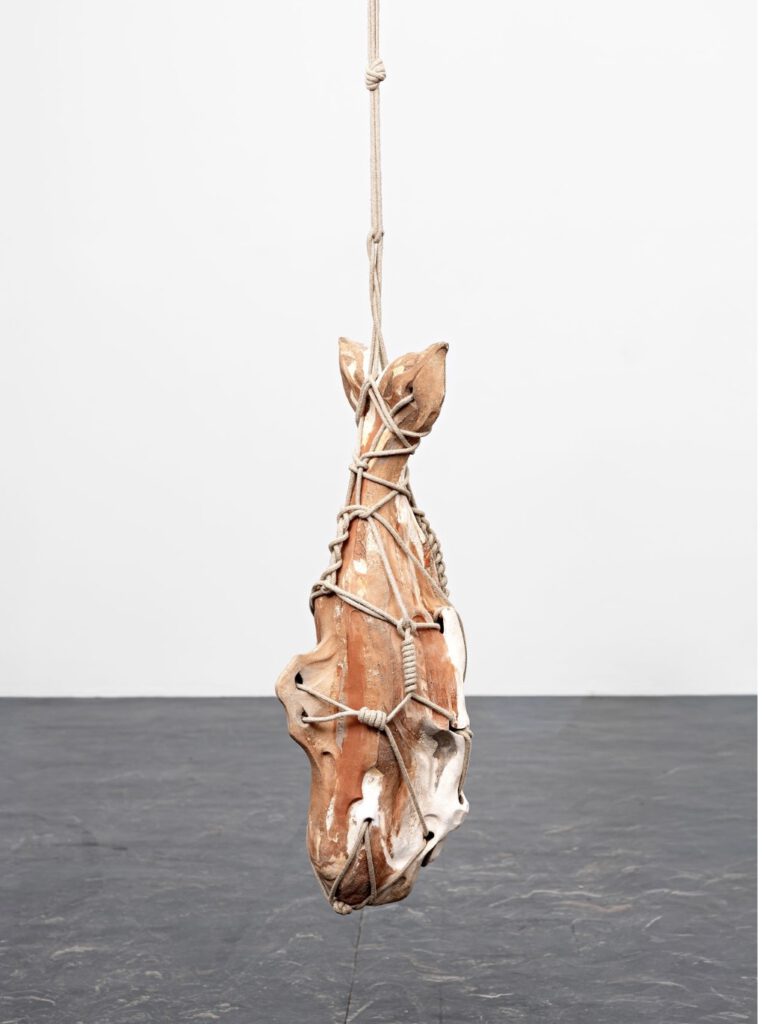
Recycled clay (ceramics), ship pulleys, ships rope
Object: 110 × 40 × 42 cm, Installation variable
2025

The whale is bound with ropes using a technique inspired by kinbaku, a Japanese form of rope bondage. Kinbaku has historical associations with hojōjutsu, a Japanese martial art in which samurai used ropes to restrain and capture prisoners. During the twentieth century, rope binding developed into an erotic and performative practice. In contemporary kinbaku, the act of binding involves an exchange of power between the person tying and the person being bound, with consent and communication playing a really important role. In many representations, it is a man who binds a woman’s body, raising questions about power, gender and the objectification of women.
In this work, there is no question of voluntary participation. A whale cannot speak or refuse. Informed by ecofeminist thinkers, I draw connections between the control exerted over female bodies and the exploitation of non-human bodies. Both are shaped by larger power structures that determine how people, animals and nature are being treated and used.